
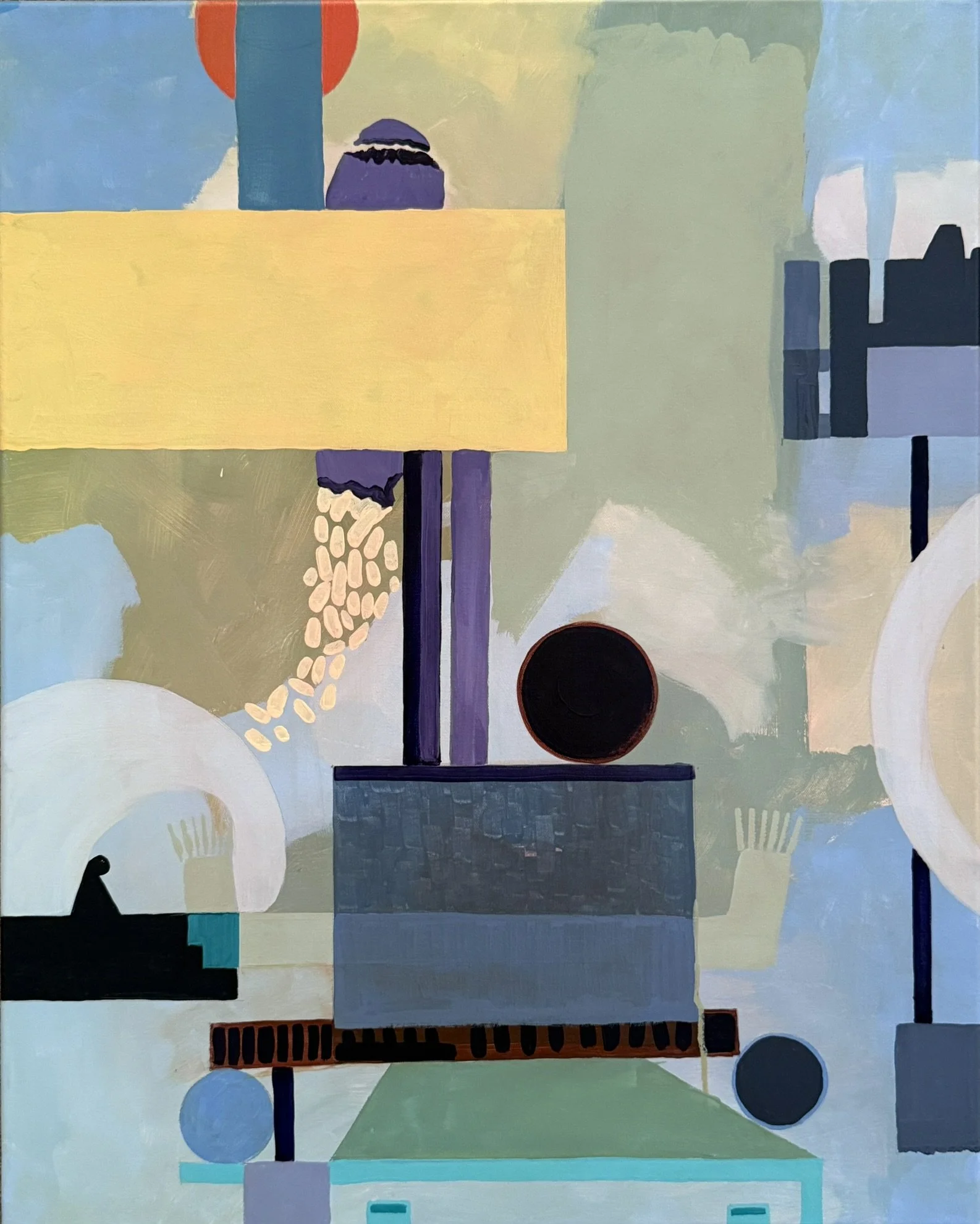
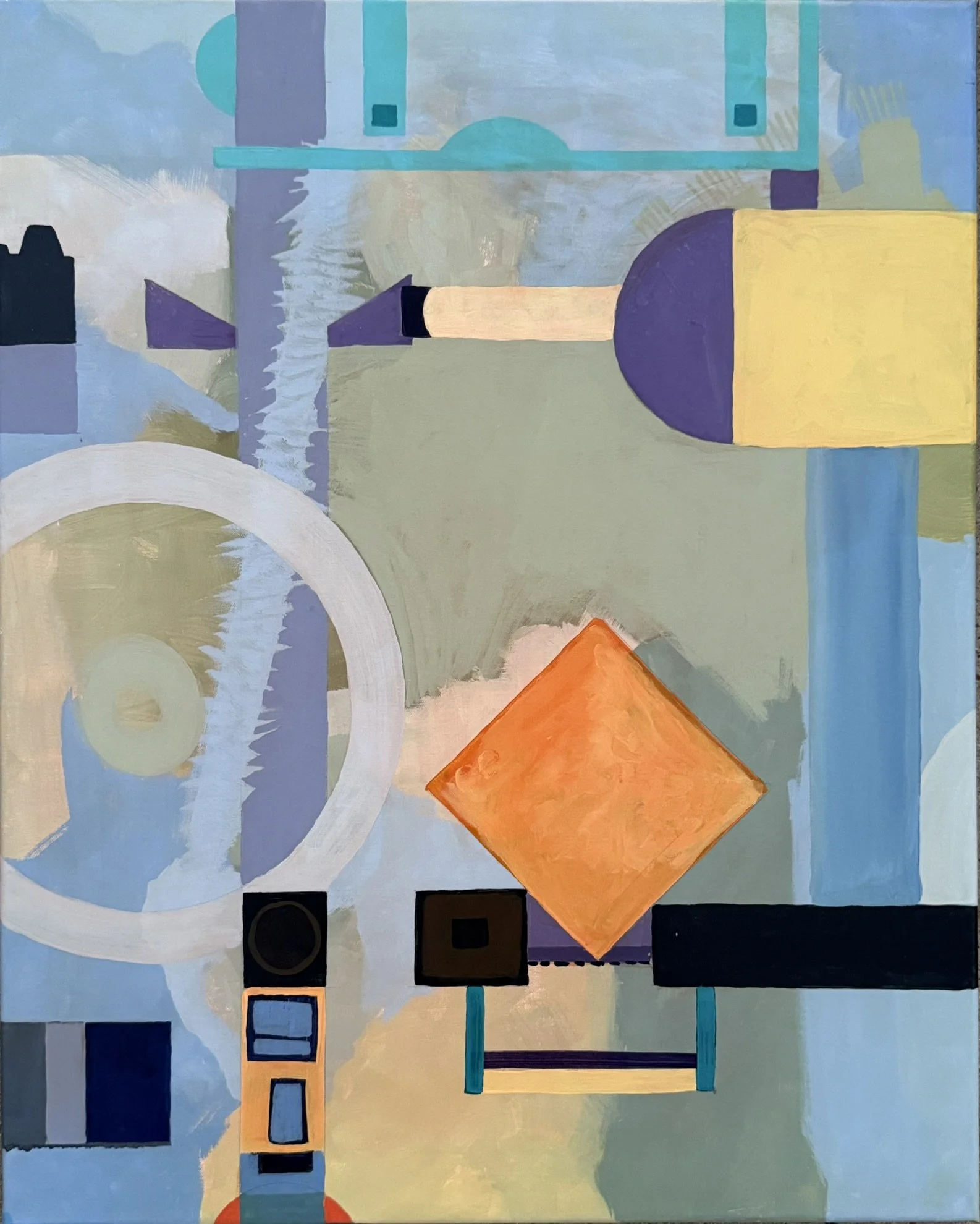
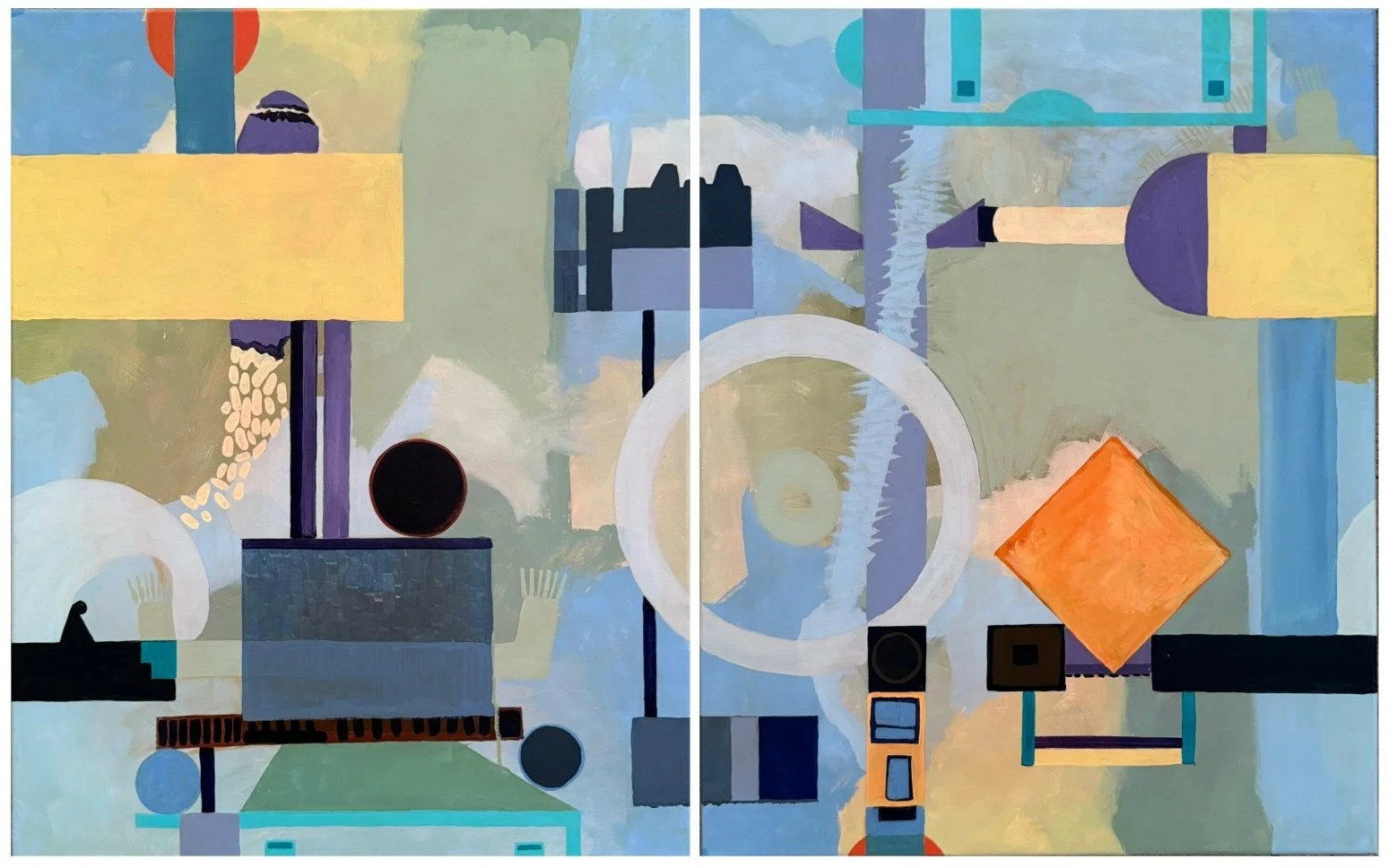
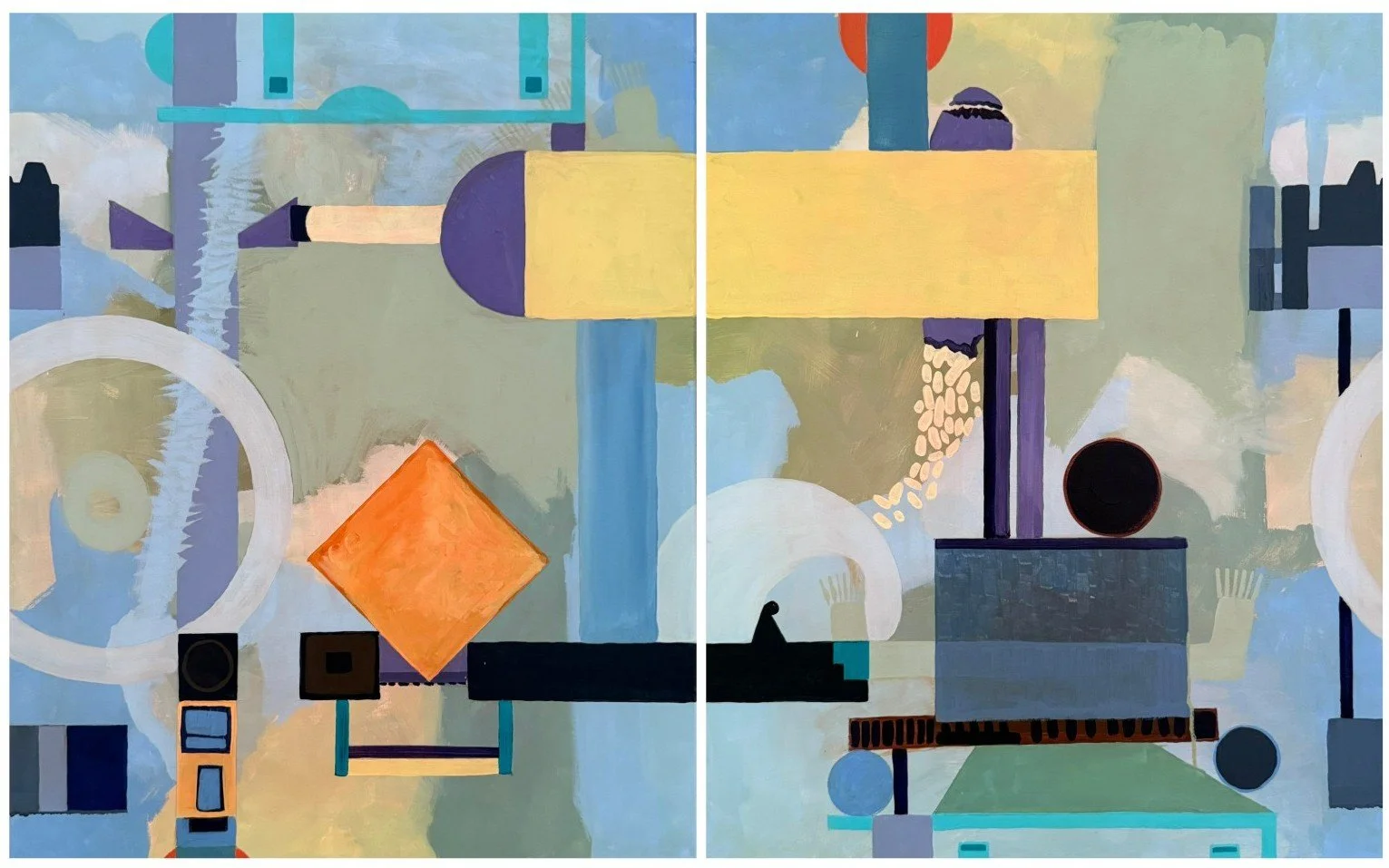
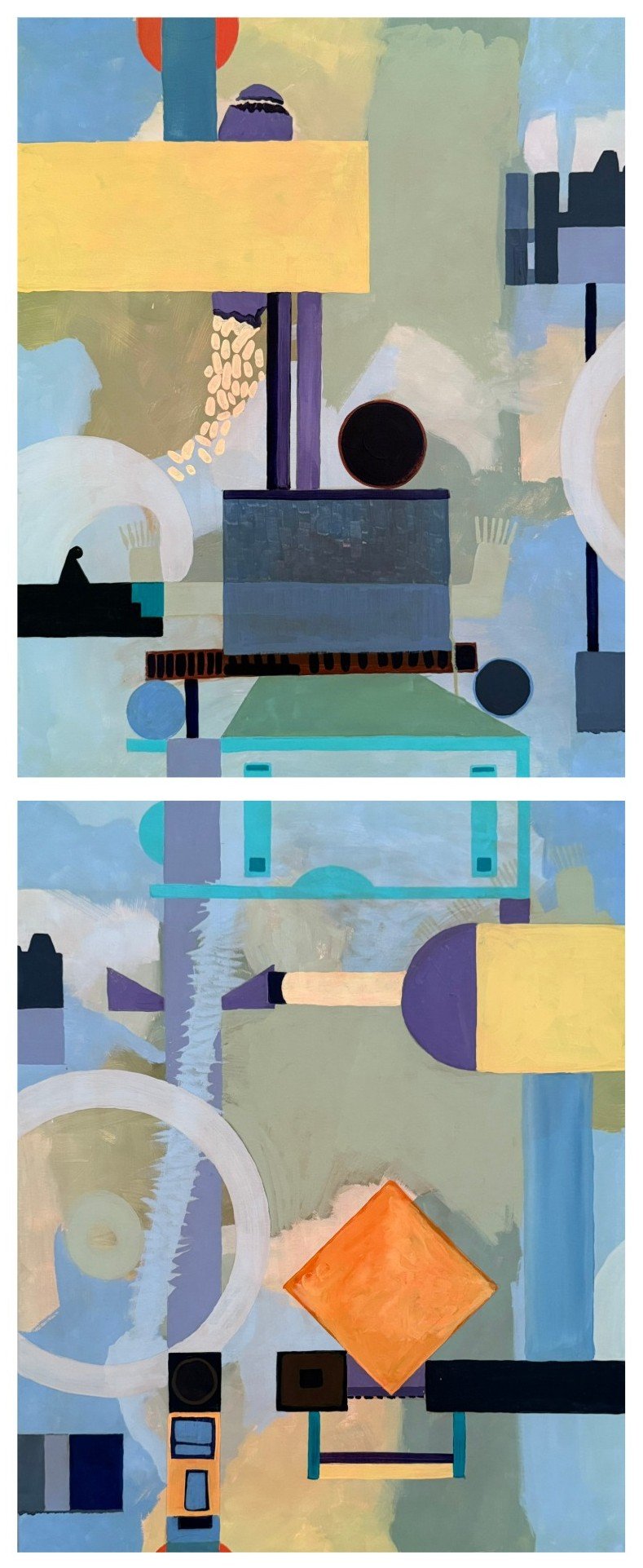
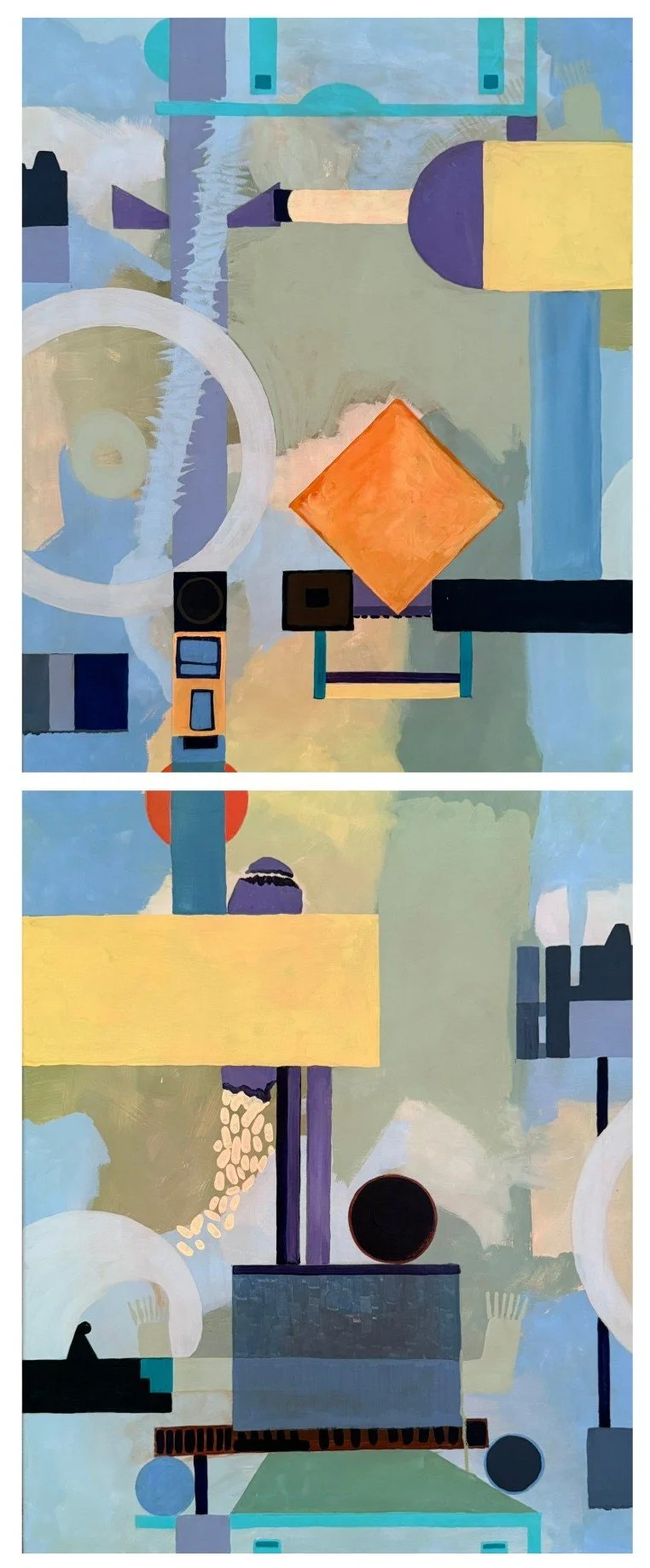
I work within a compositional challenge: can two paintings stand independently while also creating a resolved composition no matter which of their four edges are joined?
A Negotiation Between Control and Spontaneity
I begin with two panels and develop them together. As I paint, I repeatedly change their positions, placing different edges next to one another to see what happens. I return to the paintings, make adjustments, rearrange them, and look again.
Working with multiple possible arrangements requires careful decisions and an underlying structure. At the same time, I want the paintings to retain movement, intuition, accident, and surprise. Sometimes an edge creates a problem that sends me back into the work. Sometimes an unexpected connection becomes the strongest one.
Each diptych is another attempt, another search. The process becomes a negotiation between what I can control and what I discover along the way.
What Emerges Between Them
As the panels change position, their visual relationships change with them. A form that appears complete in one arrangement can become part of something larger in another. An edge can become a beginning rather than an ending, and foreground can become distance as the relationship between the two panels shifts.
The same colors, forms, and gestures can take on different roles depending on what they encounter. This shifting relationship allows the paintings to remain open rather than fixed to a single reading. The physical paintings remain the same. The visual world they create together does not.